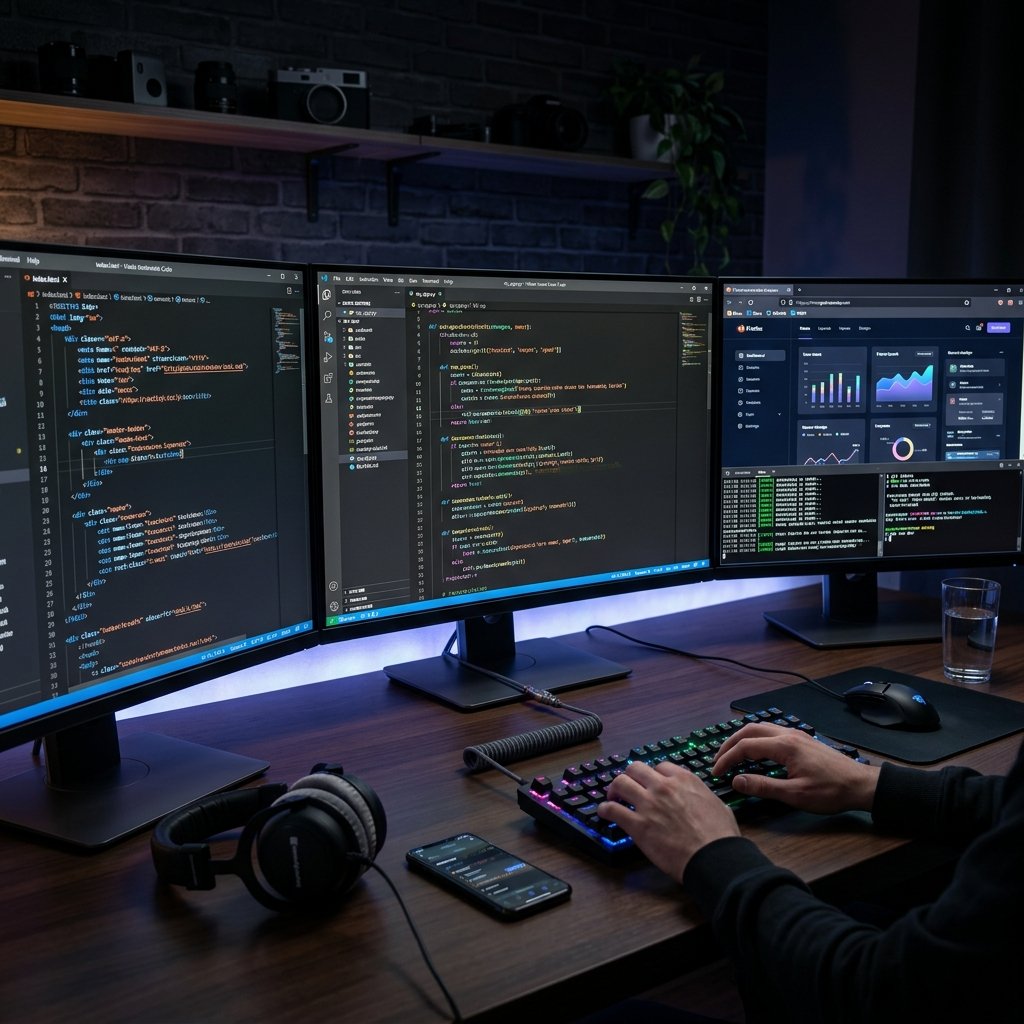
Ten years ago, learning to code meant expensive university courses, bulky textbooks, or pricey bootcamps. Today, the internet has completely changed that equation. You can access world-class programming education from Harvard, MIT, and top industry professionals — completely free of charge. The free coding resources available in 2026 are not watered-down alternatives to paid courses; many of them are genuinely superior to what you'd find in a traditional classroom. This guide will walk you through the absolute best free resources available right now, how to use them effectively, and how to build a realistic learning roadmap that will take you from complete beginner to job-ready developer.
Is It Really Possible to Learn Coding for Free?
Yes — absolutely, completely, and without reservation. Some of the best professional programmers in the world are self-taught using nothing but free resources. The myth that you need an expensive computer science degree or a $15,000 bootcamp to become a developer is thoroughly outdated. What you do need is time, consistency, and the right resources.
However, "free" doesn't mean "easy." Learning to code takes real effort regardless of the price tag. What free resources lack compared to paid alternatives is usually structured accountability, mentorship, and certification. But with modern platforms, communities, and tools, you can build a genuinely job-ready portfolio for $0 — and thousands of developers are proving it every year by landing six-figure salaries without spending a cent on formal education.
Top Free Coding Platforms in 2026
1. freeCodeCamp
freeCodeCamp is arguably the single best free coding resource on the internet. It offers a completely free, self-paced curriculum covering HTML/CSS, JavaScript, front-end frameworks, back-end development, data visualization, relational databases, quality assurance, scientific computing with Python, data analysis, machine learning, and more. Each module culminates in certification projects you build yourself, making your portfolio grow as you learn. The freeCodeCamp community is enormous and supportive, with an active forum and thousands of helpful members. It's estimated that over 40,000 people have gotten developer jobs after completing freeCodeCamp's curriculum.
2. The Odin Project
The Odin Project takes a different approach from most platforms — instead of hand-holding you through every step, it teaches you how to learn like a professional developer. You'll set up a real development environment, use Git and the command line from day one, and build projects that actually look good in a portfolio. The curriculum covers two main paths: Full Stack JavaScript (using Node.js) and Full Stack Ruby on Rails. It's completely free, open-source, and maintained by a passionate community. Many developers consider The Odin Project the most comprehensive free full-stack curriculum available.
3. Harvard's CS50 (edX)
CS50 is Harvard University's Introduction to Computer Science, and it's genuinely one of the best introductory courses ever created — regardless of price. Professor David Malan is a legendary teacher whose ability to make complex concepts accessible is unmatched. The course covers C, Python, SQL, HTML/CSS/JavaScript, and fundamental computer science concepts like algorithms and data structures. You can audit CS50 entirely for free on edX. The assignments are challenging and rewarding, and completing them gives you a strong computer science foundation that many self-taught developers lack.
4. Codecademy (Free Tier)
Codecademy pioneered browser-based interactive coding education and remains excellent for absolute beginners. Its free tier covers introductions to HTML, CSS, JavaScript, Python, SQL, and more in a guided, interactive format where you write real code in the browser and see immediate results. While Codecademy Pro (paid) offers more content, the free tier is genuinely valuable for getting started and understanding the very basics before moving to more comprehensive platforms.
5. Khan Academy
Khan Academy offers free computing courses that are particularly well-suited to younger learners and absolute beginners. Their courses cover HTML/CSS, JavaScript, SQL, and computer science fundamentals using engaging visual demonstrations. Khan Academy is 100% free with no paid tiers at all — the entire platform is nonprofit and funded by donations. It's a fantastic first step before moving to more advanced platforms.
6. MIT OpenCourseWare
MIT OpenCourseWare (OCW) provides free lecture notes, problem sets, and exams from actual MIT courses. For aspiring developers who want university-level depth, MIT's 6.0001 (Introduction to Computer Science and Programming in Python) and 6.006 (Introduction to Algorithms) are among the best resources available anywhere. The material is challenging and assumes self-motivation, but the depth and quality are genuinely world-class. You won't get feedback on your assignments unless you join study groups, but the content itself is extraordinary.
7. Exercism
Exercism offers free coding exercises in over 70 programming languages, with optional mentorship from volunteers. After submitting your code, human mentors review it and provide feedback — making it one of the rare free platforms that offers real code review. Exercism is excellent for going beyond basics and developing professional coding habits. It's particularly valuable once you've learned fundamentals and want to sharpen your skills through practice.
Best Free YouTube Channels for Coding
YouTube has become one of the most powerful free coding education platforms available. These channels consistently produce high-quality, in-depth programming content:
- Traversy Media: Brad Traversy covers web development comprehensively — HTML, CSS, JavaScript, React, Node.js, Python, and more. His crash courses are legendary for their clarity and practicality.
- Fireship: Known for fast-paced "X in 100 seconds" videos and in-depth tutorials. Perfect for developers who want to quickly understand new technologies.
- The Coding Train: Daniel Shiffman's creative, enthusiastic teaching style makes complex concepts like algorithms and data structures genuinely fun to learn.
- Sentdex: The best free resource for Python and machine learning on YouTube. Harrison Kinsley covers everything from basic Python to deep learning with TensorFlow.
- Kevin Powell: The undisputed king of CSS on YouTube. If you struggle with layouts, flexbox, or responsive design, Kevin's channel will fix that fast.
- freeCodeCamp YouTube Channel: Full-length courses (often 5–12 hours) on virtually every programming topic, all completely free. Hundreds of comprehensive courses are available.
Free Resources by Programming Language
Here's where to start based on your chosen language:
- Python: Python.org's official tutorial, freeCodeCamp's Python courses, Automate the Boring Stuff with Python (free online book), Sentdex YouTube
- JavaScript: The Odin Project, freeCodeCamp, javascript.info (the best free JS reference), Traversy Media YouTube
- Java: MOOC.fi (University of Helsinki's free Java course), Oracle's official Java tutorials, Codecademy free Java intro
- HTML/CSS: freeCodeCamp, MDN Web Docs (the definitive reference), Kevin Powell YouTube, The Odin Project
- SQL: Mode Analytics SQL Tutorial, SQLZoo, Khan Academy's SQL course, freeCodeCamp
- C/C++: CS50 (Harvard), cppreference.com, learncpp.com (excellent free book-style resource)
A Beginner's Learning Roadmap
If you're starting from zero and want to become a web developer (one of the most accessible and in-demand paths), here's a realistic roadmap using only free resources:
- Months 1–2: HTML & CSS Fundamentals — Use freeCodeCamp's Responsive Web Design certification. Build 5 required projects.
- Months 2–4: JavaScript Basics — Complete freeCodeCamp's JavaScript Algorithms and Data Structures certification. Practice daily on Exercism.
- Months 4–6: Deepen with The Odin Project — Work through the Foundations path, then choose Full Stack JavaScript.
- Months 6–9: Build Real Projects — Create 3–5 original projects, upload them to GitHub, and deploy them using Netlify or Vercel (both free).
- Months 9–12: Specialize — Learn React, Node.js, and a database (SQL or MongoDB). Apply to jobs. Practice interview questions on LeetCode (free tier).
"The secret to learning programming for free is consistency over intensity. Thirty minutes every day beats a 10-hour weekend session every time. The people who succeed are the ones who never stop, even when it's hard."
How Long Does It Take to Learn Coding?
This is the most common question beginners ask, and the honest answer is: it depends. Most people can learn the basics of a programming language in 4–8 weeks of consistent daily practice. Getting to a point where you can build simple projects takes 3–6 months. Becoming job-ready as a junior developer typically takes 6–18 months of focused study. These timelines assume you're coding for at least 1–2 hours daily. Part-time learners (1 hour per day) should expect the longer end of these ranges. Full-time students (6–8 hours daily) can compress these timelines significantly.
Common Mistakes Beginners Make
Knowing what to avoid is just as important as knowing what to do. Here are the most common pitfalls that slow down or derail beginner coders:
- Tutorial Hell: Watching tutorials endlessly without building anything. After every tutorial, build something from scratch without looking at the tutorial.
- Switching languages constantly: Jumping from Python to JavaScript to Java every few weeks because one seems "better." Pick one and stick with it for at least 6 months.
- Not using version control: Failing to learn Git from the beginning. Git is not optional — it's essential. Start using it from your very first project.
- Skipping the basics: Rushing to frameworks like React before mastering JavaScript fundamentals. Frameworks become confusing and frustrating without a solid foundation.
- Learning in isolation: Not joining communities, not asking questions, not helping others. Community accelerates learning dramatically.
- Waiting until you're "ready" to apply for jobs: You'll never feel fully ready. Most junior devs feel underqualified when they get their first job. Apply when you have solid projects to show.
Conclusion
Learning to code for free has never been more achievable than it is in 2026. Platforms like freeCodeCamp, The Odin Project, and Harvard's CS50 provide genuinely world-class programming education at no cost. YouTube channels like Traversy Media and Fireship offer thousands of hours of high-quality tutorials. With the right plan, consistent effort, and a willingness to build real projects, you can go from complete beginner to employed developer without spending a single dollar on education. The resources are there. The community is there. The only thing that separates people who learn to code from those who don't is whether they start — and whether they keep going when it gets hard. Start today.