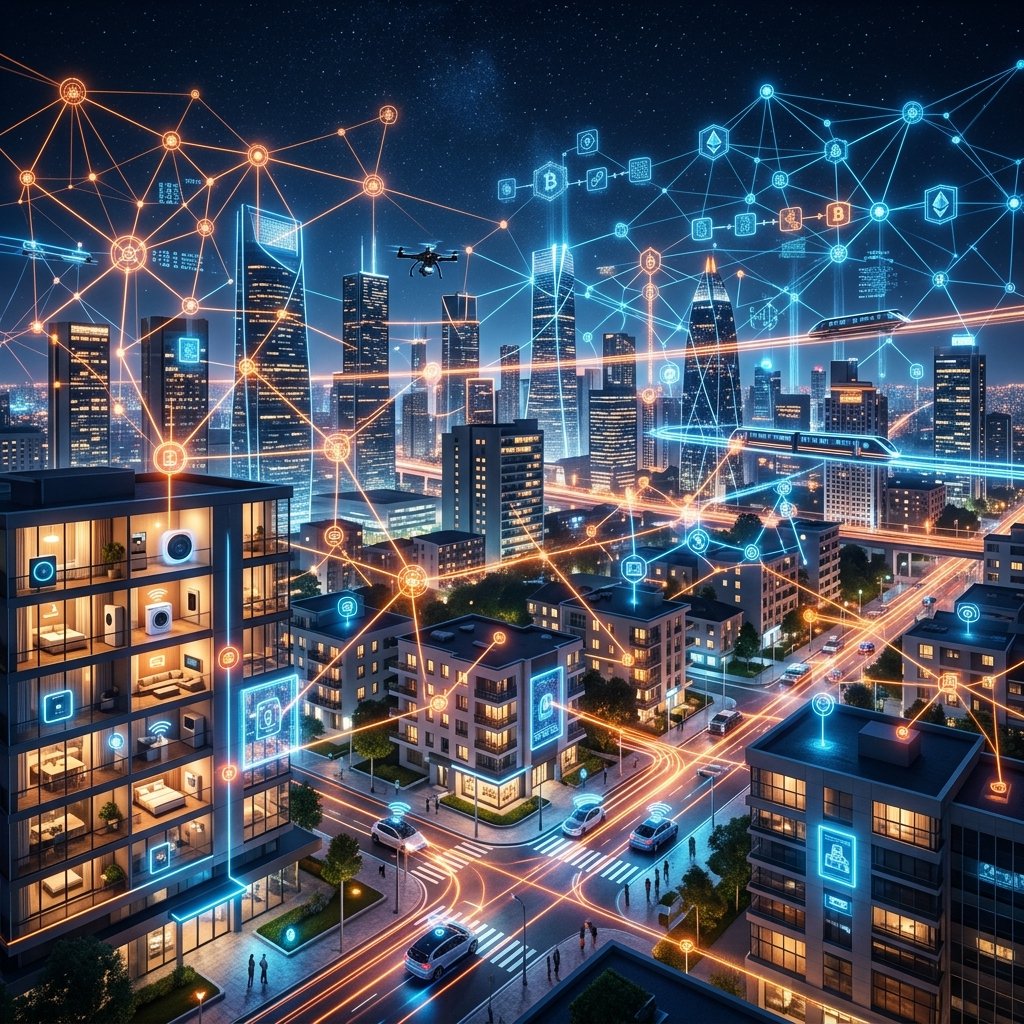
You've seen the "5G" symbol on your phone and heard it mentioned in news headlines, product launches, and political debates. But what actually is 5G technology? How is it different from the 4G LTE you already use? And more importantly — does it actually matter to you as a regular consumer? The fifth generation of cellular network technology isn't just a marketing upgrade; it's a fundamentally new type of wireless infrastructure that promises to transform not just how we use our phones, but how entire industries operate. This guide cuts through the hype to explain exactly what 5G is, how it works technically, what it means for everyday users, and when you'll really benefit from it.
What is 5G? A Clear Definition
5G stands for "fifth generation" — it's the fifth major iteration of cellular wireless technology, following 1G (analog voice, 1980s), 2G (digital voice and SMS, 1990s), 3G (mobile data and the early mobile internet, 2000s), and 4G LTE (HD streaming, app-based smartphones, 2010s). Each generation has brought dramatically faster data speeds, lower latency, and the ability to connect more devices simultaneously. 5G is no different — but the scale of improvement is significantly larger than any previous generational leap.
Defined by the 3GPP international standards body, 5G is designed to deliver peak download speeds of up to 20 Gbps (gigabits per second), latency as low as 1 millisecond, and the ability to connect up to 1 million devices per square kilometer. To put that in perspective, 4G LTE offers peak speeds of about 1 Gbps and latency of 30–70ms. In theory, 5G is up to 20 times faster with 30–70 times lower latency — though real-world performance varies considerably depending on which type of 5G you're using.
How Does 5G Work?
5G uses several new technologies that fundamentally change how wireless signals are transmitted. Understanding these helps explain both 5G's capabilities and its limitations:
Millimeter Waves (mmWave)
Traditional cellular networks use radio frequencies below 6GHz. 5G mmWave uses much higher frequencies — 24GHz to 100GHz. These extremely high frequencies can carry enormous amounts of data but have very short range (a few hundred meters) and are blocked by walls, windows, trees, and even rain. mmWave 5G is what enables multi-gigabit speeds but is only available in dense urban environments, sports stadiums, and convention centers where many small cells can be deployed close together.
Small Cells
Because 5G signals (especially mmWave) don't travel far, networks require a dense grid of small base stations — called small cells — mounted on lamp posts, buildings, and utility poles every few hundred meters. This is why 5G deployment is expensive and time-consuming: carriers need to install tens of thousands of small cells in cities before coverage becomes meaningful. Mid-band 5G uses fewer small cells and has better range, making it the most practically scalable form of 5G.
Massive MIMO
MIMO stands for Multiple Input, Multiple Output. Traditional 4G base stations might have 8 antennas. 5G "Massive MIMO" antennas have 64, 128, or even 256 antenna elements, all working together. This dramatically increases how many simultaneous connections a single base station can handle and improves signal quality by using multiple signal paths at once.
Beamforming
Instead of broadcasting a signal in all directions equally (like a traditional antenna), 5G base stations use beamforming to focus the signal directly toward specific devices. This intelligent directional broadcasting reduces interference, extends effective range, and increases the signal strength received by each connected device.
5G vs 4G LTE: Side-by-Side Comparison
Here's how 5G and 4G LTE compare across the metrics that matter most:
| Metric | 4G LTE | 5G (Mid-Band) | 5G (mmWave) |
|---|---|---|---|
| Peak Download Speed | ~1 Gbps | ~2–4 Gbps | Up to 20 Gbps |
| Typical Real Speed | 20–100 Mbps | 100–500 Mbps | 500–3,000 Mbps |
| Latency | 30–70 ms | 10–20 ms | 1–5 ms |
| Device Density | ~4,000/km² | Up to 1M/km² | Up to 1M/km² |
| Coverage Range | Several km | 1–2 km | 100–300 m |
| Building Penetration | Good | Moderate | Poor |
The Real Benefits of 5G
Beyond faster phone downloads, 5G's real transformative potential lies in what it enables for industries and emerging technologies:
Internet of Things (IoT) at Scale
Smart cities require millions of sensors — monitoring traffic, air quality, water systems, energy grids, and public safety — all connected and communicating in real time. 4G networks simply cannot support this device density. 5G's ability to connect up to 1 million devices per square kilometer is the foundational requirement for truly smart city infrastructure.
Autonomous Vehicles
Self-driving cars need to communicate with each other, traffic infrastructure, and central systems with latency measured in milliseconds, not tens of milliseconds. A 50ms delay at highway speeds could mean traveling 3 meters before responding to a signal. 5G's near-1ms latency makes vehicle-to-vehicle (V2V) and vehicle-to-infrastructure (V2I) communication feasible at scale.
Augmented and Virtual Reality
Truly immersive AR and VR experiences require enormous bandwidth and extremely low latency. Current 4G networks can't reliably support untethered, high-fidelity VR without causing motion sickness from lag. 5G makes cloud-rendered VR experiences — where graphics are computed in the cloud and streamed to a lightweight headset — genuinely viable for the first time.
Remote Surgery and Healthcare
Robotic surgery requires real-time precision feedback between surgeon and robot. With 4G latency, remote surgery is too risky. 5G's ultra-low latency enables surgeons to operate on patients in remote locations through robotic systems with the same responsiveness as if they were in the same room.
Industry 4.0 and Smart Manufacturing
Factory floors equipped with 5G can run hundreds of robots, conveyor systems, and quality sensors with wireless precision that matches wired connections. This enables flexible, reconfigurable manufacturing floors that would be impossible to rewire constantly for different products.
Global 5G Rollout Status
As of 2026, 5G coverage has expanded dramatically from its early days but remains uneven globally. The countries leading 5G deployment include South Korea, China, the United States, the United Kingdom, Germany, Japan, and Australia. China has the most 5G base stations in the world by a massive margin, with over 3 million deployed. South Korea has the highest 5G adoption rate per capita.
In the United States, all major carriers (Verizon, AT&T, T-Mobile) offer 5G coverage. T-Mobile has the broadest mid-band 5G coverage, while Verizon has focused more on mmWave in dense urban cores. Rural coverage remains primarily 4G LTE or low-band 5G with only modest speed improvements over 4G. Globally, GSMA Intelligence estimates that 5G connections will exceed 2 billion by the end of 2025, representing roughly 25% of all mobile connections worldwide.
Health Concerns: The Facts
5G has generated significant controversy regarding health effects, driven largely by social media misinformation. It's important to address these concerns with actual science. The scientific consensus from organizations including the World Health Organization (WHO), the International Commission on Non-Ionizing Radiation Protection (ICNIRP), and national health agencies worldwide is clear:
- 5G uses non-ionizing radiation — it does not have enough energy to break chemical bonds or damage DNA, unlike X-rays or gamma rays.
- mmWave frequencies are too high to penetrate skin deeply. The primary biological effect is mild surface heating, which the body easily dissipates.
- Exposure limits are set with large safety margins — typically 50 times below harmful levels.
- No credible scientific study has demonstrated health harm from properly regulated 5G exposure.
- The idea that 5G "caused" or "spread" COVID-19 is factually impossible — viruses cannot travel on radio waves.
"There is no evidence that exposure to low-level electromagnetic fields is harmful to human health." — World Health Organization (WHO)
Do You Need a 5G Phone Now?
This is the practical question most consumers care about. The honest answer in 2026 is: probably yes, but not urgently for speed reasons. Here's the nuanced reality:
Reasons to get a 5G phone now: Almost all new mid-range and flagship smartphones ship with 5G as standard — avoiding 5G now means buying older hardware. 5G mid-band coverage is improving rapidly. If you're in a city, you'll genuinely experience faster speeds. 5G phones use 4G automatically where 5G isn't available. And if you keep phones for 3+ years, having 5G future-proofs your device.
Reasons not to rush: If you have a 4G phone that works well and you're on a budget, there's no compelling reason to upgrade specifically for 5G yet. In rural areas, 4G LTE and 5G low-band offer near-identical real-world speeds. And 5G's most transformative use cases (autonomous vehicles, remote surgery, smart cities) are still years from being consumer-relevant.
Conclusion
5G is a genuine technological leap — not just a marketing buzzword. Using millimeter waves, massive MIMO antennas, beamforming, and dense small-cell networks, 5G delivers speeds up to 20x faster than 4G LTE with latency approaching 1 millisecond. While everyday smartphone users will notice faster downloads and more reliable connections in crowded areas, 5G's truly transformative impact will be felt in autonomous vehicles, smart city infrastructure, industrial automation, and augmented reality applications. Global rollout is accelerating rapidly, and health concerns have been thoroughly debunked by major scientific organizations worldwide. As for whether you need a 5G phone right now — next time you upgrade, absolutely yes. But your current 4G device isn't leaving you stranded. The 5G revolution is real, it's underway, and its most exciting chapters are still being written.